Reviewing the "Nice Nurse on Vacation" SVG for Embroidery
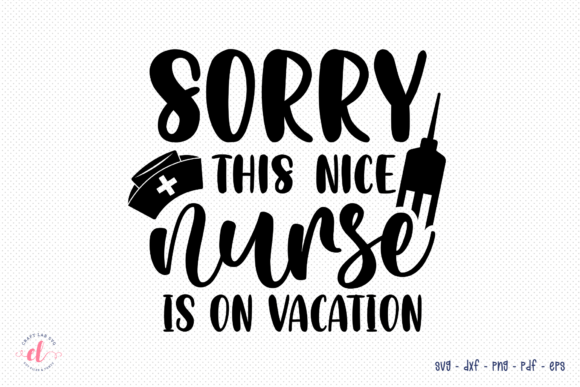
As a designer who spends half my life staring at digitized files and the other half pulling bobbins out of tangled messes, I have learned to look past the pretty preview images. We all know that what looks crisp on a computer screen does not always translate well to fabric. Recently, I came across the Sorry This Nice Nurse is on Vacation SVG, a piece of digital art marketed heavily toward the healthcare and crafting communities. While the product description highlights its versatility for t-shirts, mugs, and signs, my interest lies in how this graphic holds up when subjected to the needle and thread. Is it a viable asset for your next embroidery project, or is it better left for vinyl cutting?
First Impressions: Mood and Visual Personality
The immediate appeal of this design is its tone. It strikes a balance between professional pride and playful relief. For nurses, who often endure high-stress environments, the message is relatable and lighthearted. Visually, the layout tends to feature bold, readable typography paired with thematic icons—perhaps a stethoscope, a sun, or a cocktail glass, depending on the specific variation you are viewing. From a Graphics perspective, the lines appear clean, which is a promising start. However, clean vector lines do not guarantee a smooth stitch-out. The mood is casual, making it an excellent candidate for informal wear rather than clinical uniforms. It feels like a design meant for a weekend brunch, not a hospital shift.
Real-World Application: The Tote Bag Test
To truly evaluate this file, I imagined applying it to a common handmade product: a canvas tote bag. This is a staple item for Etsy sellers and craft fair vendors. Canvas has a distinct weave, and it requires a design that can bridge the gaps in the fabric texture without looking pixelated or sparse. If the Sorry This Nice Nurse is on Vacation SVG relies too heavily on thin, single-line running stitch elements, it might get lost in the weave of a heavy cotton tote. Conversely, if the text is bold enough, it creates a striking contrast. I envision this working beautifully as a central chest print on a tote, where the sturdy fabric supports the weight of the stitches without puckering.
Another strong contender for this design is a cozy fleece sweatshirt. Sweatshirt embroidery requires careful handling of stitch density. Fleece is thick and plush; if the design is too dense, it becomes stiff and uncomfortable. If it is too light, the fabric shows through. This particular graphic, with its likely mix of text and simple icons, seems well-suited for a medium-density fill. It would make a fantastic personalized gift for a nurse friend heading off on a well-deserved break. The humor lands well, and the visual weight is manageable for home machines.
Navigating Technical Challenges
While the concept is solid, there are areas where caution is necessary. The primary concern with any SVG-to-embroidery conversion is the complexity of the details. If the design includes intricate corners or very small lettering, these areas are prone to thread breaks and bird nests. When evaluating this as a machine embroidery design, you must consider the stitch density. A design intended for a Cricut or Silhouette cutter often uses solid fills that are perfect for vinyl but disastrous for thread. Vinyl can handle a solid block of color; embroidery cannot. If you are digitizing this SVG yourself, you will need to convert large solid areas into appropriate fill stitch patterns, ensuring there is enough underlay to prevent the fabric from showing.
Curved surfaces present another hurdle. Placing this design on a cap or a baby onesie requires resizing. On a baby embroidery project, scale is everything. A design that looks proportional on an adult t-shirt might overwhelm a tiny onesie. Furthermore, stretchy fabrics like those used in infant wear require robust stabilization. Without a proper cut-away stabilizer, the tension from the stitching could distort the garment, ruining the fit and the look. Always test on scrap fabric first. Do not assume the default settings will work. Check how the thread colors interact with the fabric background. A white thread on a light gray shirt might lack contrast, while a bright neon on a dark navy could bleed if the digitizing isn't tight.
Commercial Viability for Small Shops
For the craft business owner, this design offers clear commercial potential. The nursing niche is evergreen, and the "vacation" angle adds a seasonal spike during summer months and holiday breaks. As an Etsy seller, you can leverage this design across multiple product lines. It works for custom apparel, such as team shirts for nursing units going on retreat. It fits well on kitchen towels for a humorous housewarming gift. It even translates to hard goods if you are using sublimation or vinyl, as the product description suggests. However, if you are selling finished embroidered items, the perceived value depends on the quality of the stitch-out. A messy border or loose threads will undermine the professionalism of your small shop product.
Brand consistency is also key. If your shop specializes in delicate, floral applique design work, this bold, text-heavy graphic might feel out of place. But if your brand voice is fun, modern, and relatable, this asset fits perfectly. It enhances buyer engagement because it tells a story. Customers are not just buying a shirt; they are buying a moment of recognition and humor. That emotional connection drives sales. When creating printable mockup images for your online store, ensure you show the design on realistic textures. Show it on a wrinkled t-shirt or a folded towel. This builds trust and sets accurate expectations for the finished product.
Practical Designer Notes
Before you load this file into your machine, take a moment to review the technical specifics. Since the product description mentions compatibility with cutting machines like Cricut, it is crucial to verify if you are receiving a native embroidery file format (such as PES, DST, or JEF) or just the SVG. If it is only an SVG, you will need to digitize it or hire a digitizer. Do not attempt to auto-digitize complex graphics without manual editing; the results are rarely professional. Check the recommended hoop size. Ensure your machine can accommodate the dimensions of the design without re-hooping, which can lead to alignment issues.
- Test Stitch First: Always run a test on similar fabric to check for puckering or thread breaks.
- Contrast Check: View the design in black and white to ensure the elements are distinct and readable.
- Stabilizer Selection: Use tear-away for stable woven fabrics and cut-away for knits and stretchy materials.
- License Verification: Confirm whether the license allows for commercial use of finished goods. Many free or low-cost SVGs have restrictions.
- Thread Quality: Use high-quality polyester or rayon thread to reduce breakage, especially in dense text areas.
In conclusion, the Sorry This Nice Nurse is on Vacation SVG is a charming addition to your library of design assets, provided you approach it with a designer’s eye. It is not just a graphic; it is a blueprint for a physical object. By respecting the limitations of fabric and thread, and by understanding the context in which the final item will be used, you can transform this digital file into a high-quality commercial embroidery product. Whether for a holiday embroidery gift or a year-round bestseller, the key lies in the execution. Treat the design with care, respect the materials, and your customers will appreciate the craftsmanship.